
DOJ presses Tornado Cash prosecution as Treasury drops mixer reporting plan
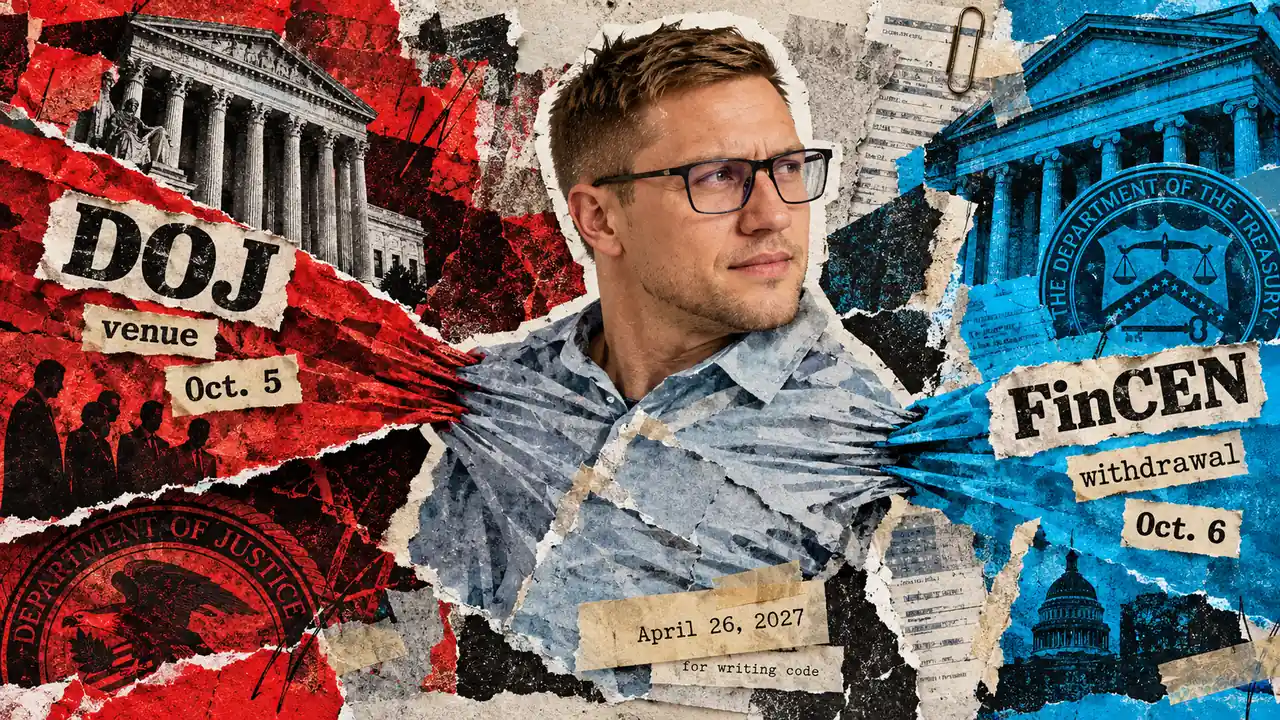
Federal prosecutors are using a new Bitcoin Fog appeal to defend trying two counts against Roman Storm in New York. Their Oct. 5 letter asks Judge Katherine Polk Failla to reject his venue challenge on the money-laundering and money-transmission conspiracy counts. Storm co-founded Tornado Cash, a cryptocurrency mixer that obscures transaction trails.
The filing arrived as Treasury moved to withdraw a broad mixer-reporting proposal. The continuing case turns on prosecutors’ allegation that Storm knowingly participated in criminal activity, while the policy changes recognize lawful privacy and limit particular charging decisions. Whether his software work crossed that criminal boundary remains disputed.
Storm, posting as @rstormsf, described potential imprisonment as punishment “for writing code” and contrasted the case with Treasury’s retreat. His criticism captures the stakes for privacy developers, but the latest filing concerns where the case can be tried.
Storm already has an August 2025 conviction on one money-transmission conspiracy count carrying a statutory maximum of five years. An Aug. 25, 2026 court order scheduled his retrial for April 26, 2027, citing his pending acquittal motion and requested continuance.
Southern District of New York prosecutors rely on the D.C. Circuit’s Sept. 25 decision in United States v. Sterlingov, involving Bitcoin Fog, a different cryptocurrency mixer. Prosecutors cite its venue holdings as persuasive authority for Storm’s pending challenge.
Their argument centers on a Manhattan customer, Shakeeb Ahmed. They say his deposits helped enlarge the anonymity pool, making funds harder to trace, even though the money remained there only briefly. They also argue that serving a customer in the district supports venue for the money-transmission count.
Why the crypto policy shift has not ended the case
Treasury’s Financial Crimes Enforcement Network is withdrawing its 2023 finding and proposed enhanced reporting and recordkeeping measure for international cryptocurrency mixing. The withdrawal notice, filed Oct. 5 for Oct. 6 publication, cites concerns about a “chilling effect on legitimate activity” and burdens on financial institutions.
FinCEN recognizes lawful financial privacy while retaining monitoring for money laundering, terrorist financing and other illicit activity. The withdrawal addresses an administrative reporting proposal. It does not repeal criminal offenses or decide Storm’s case.
DOJ’s own shift contains a similar boundary. Deputy Attorney General Todd Blanche’s April 7, 2025 memo directed prosecutors away from targeting mixers for their users’ conduct or unwitting regulatory violations and called for review of ongoing cases.
But the memo expressly excludes section 1960(b)(1)(C), concerning funds known to come from crime or intended for unlawful activity, from its regulatory charging restriction.
In August 2025 remarks, DOJ official Matthew Galeotti added protection against new charges under that provision for qualifying software: it must be truly decentralized, solely automate peer-to-peer transactions, and leave the third party without custody and control over user assets. Other charges could remain appropriate where criminal intent exists.
That conditional promise about new charges did not set aside Storm’s existing conviction.
DOJ described Storm’s conduct as building, maintaining and profiting from a service despite knowing it transmitted criminal proceeds. Storm contests criminal treatment of his developer activity.
The April 9, 2026 hearing exposes the breadth of the government’s theory. Prosecutor Ben Arad argued that legitimate deposits helped conceal criminal funds, supporting his case against the developers. He expressly distinguished innocent depositors’ knowledge and perspective from that of Storm and his alleged coconspirators.
The dispute therefore centers on the developers’ responsibility for running and improving a service used by criminals.
Failla challenged whether the broader theory established willful conduct. Arad later emphasized active steps to maintain and improve the service, rather than merely leaving its pools operational. The judge scrutinized the government’s theory.
Why Ulbricht’s pardon is different
The comparison with Ross Ulbricht raises a separate question of individual clemency. Trump’s Jan. 21, 2025 pardon granted individual clemency to Ross Ulbricht for specified convictions. It did not extend to Storm or establish a general exemption for crypto developers.
The next consequential developments are judicial decisions on the challenges and any changes to that schedule. Washington’s support for lawful crypto privacy has not itself settled the contested criminal case.
The post DOJ presses Tornado Cash prosecution as Treasury drops mixer reporting plan appeared first on CryptoSlate.